
MNDOT SMITH AVENUE HIGH BRIDGE
OVERVIEW
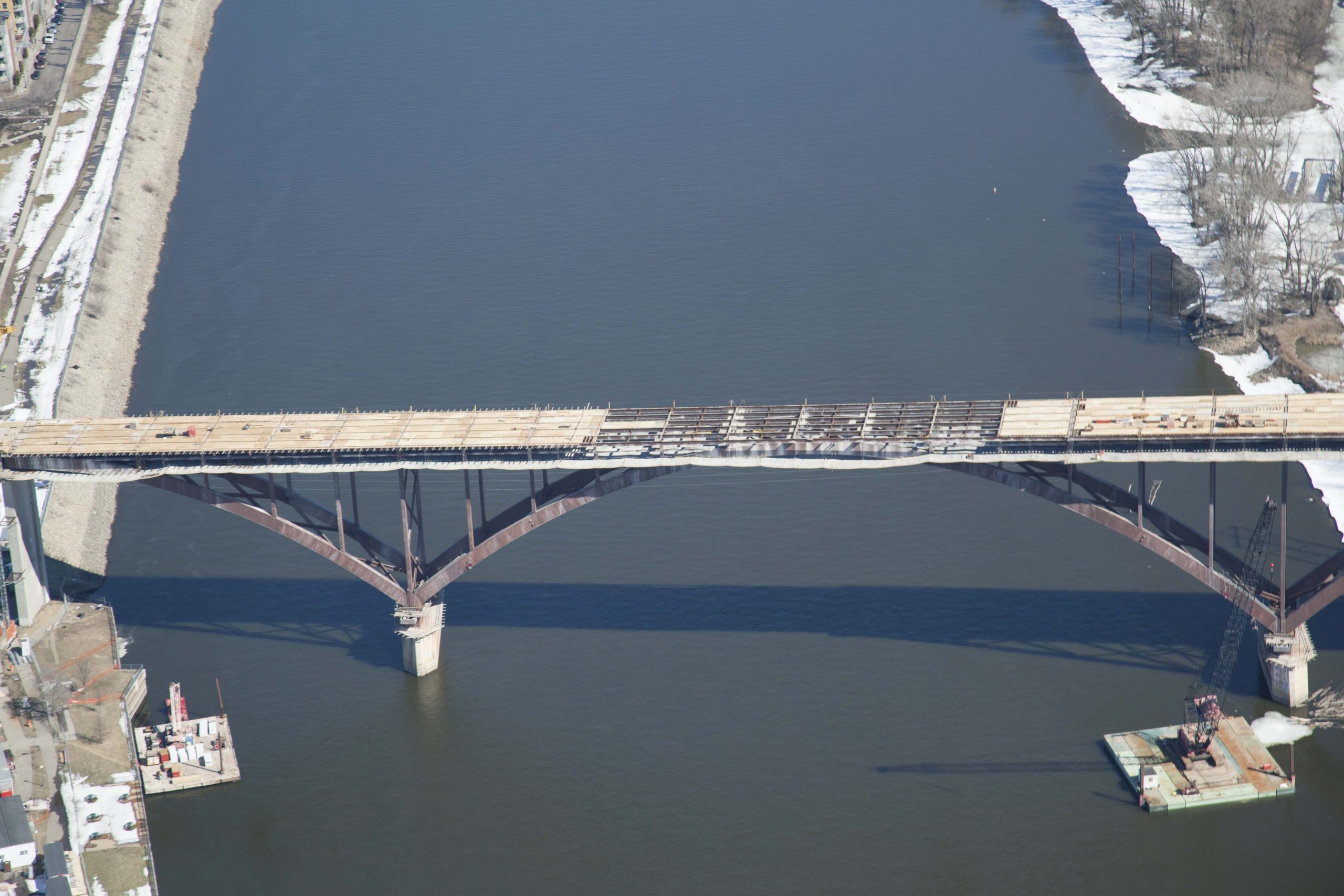
Using the CMGC delivery method, Kraemer collaborated with MnDOT and the designer on the removal and replacement of the Smith Ave. High Bridge deck over the Mississippi River. Work included steel repairs, roadway resurfacing and improvements, replacing signals at five intersections, landscaping, drainage improvements, sidewalks and pedestrian accessibility. The existing bridge was a post tensioned steel structure that required specific removal and replacement sequence to keep the structure stable. The project included a unique de-tensioning system developed by Kraemer that constructed a mock-up of the existing tendon system and tested the de-tensioning system to demonstrate safety.

INNOVATIONS
The most significant challenge on the project was the de-tensioning of the bridge to remove the existing deck and the subsequent re-tensioning of the bridge as the new deck was sequentially constructed. The Kraemer team proposed, designed and developed an innovative de-tensioning scheme and apparatus which would de-tension each of the tendons in a safe and controlled manner. The de-tensioning apparatus was comprised of a cylindrical clamping system which utilized torque bolts and a steel frame to clasp the outside of a tendon. Although the system was proven through analysis and engineering calculations, the team elected to further mitigate risk to the project by performing a full scale mock-up and test of the de-tensioning process. MnDOT provided Kraemer an early work package to fabricate the de-tensioning apparatus and performed a test during the pre-construction phase. Threaded rods extending from each end of the apparatus where then tightened to match the existing tension in the strands. Utilizing hydraulic wrenches, the apparatus was then used to slowly de-tension a small section of the tendons, while maintaining tension in the existing strand. The strands were then cut and the apparatus was used to slowly release the energy in the stands until the full strand became slack. The results of the test were positive and validated that the approach would work for the existing bridge.